

Aerospace engineering simulation software
The aerospace industry builds machines that must perform under extreme conditions. Engineers must understand how air, heat, loads and vibrations affect each part of an aircraft. Physical testing alone cannot answer all these needs. Engineers use aerospace engineering simulation software to predict how designs behave before building a single part. This approach helps teams reduce risk, save cost and improve safety.
ANSYS plays a major role in solving design and safety problems in aerospace. It offers strong aerospace simulation tools that support early testing and fast decision-making. Engineers use these tools to run structural, thermal, aerodynamics and performance studies. This approach keeps development efficient and safe.
This blog explains how ANSYS supports aerospace engineers. It focuses on design validation, safety, performance and problem-solving. The content is clear, direct and suitable for students and professionals who want to learn how simulation helps this industry.
The Role of Simulation in Modern Aerospace Engineering
Aerospace products face pressure loads, vibration, heat and long-term fatigue. Engineers must test each design feature under these conditions. Traditional testing takes time and requires many physical prototypes. This slows development.
Simulation changes this process. With aerospace design analysis software, engineers study part behavior on a computer. They change materials, shapes or thicknesses and run tests in minutes. They test hundreds of conditions without building anything. This helps teams avoid costly mistakes.
Today, engineering simulation for aerospace industry workflows include structural analysis, airflow studies, thermal behavior and system-level testing. These workflows help both new designs and upgrades of existing systems. Simulation also supports certification by giving engineers full design insight.
Why Aerospace Companies Use ANSYS for Design and Safety
ANSYS remains a trusted choice because of its accuracy, wide physics coverage and validation. Engineers consider it the best simulation software for solving aerospace safety challenges because it handles complex multiphysics cases. Teams can combine structural, fluid, thermal and electromagnetic studies. They can test full assemblies or small components.
Many organizations choose ANSYS because they get reliable results at every stage. This includes early design, prototype development, testing and certification. The software reduces risk by catching problems early. It also makes workflows faster by reducing physical test cycles.
Another reason aerospace companies rely on ANSYS for safety analysis is the availability of specialized solvers. These solvers support fatigue checks, vibration behavior, airflow, temperature prediction and system-level modeling. All these studies are essential in aerospace.
Structural Analysis: Keeping Aircraft Strong and Safe
Studying Loads and Strength
Every aircraft part must handle high loads. Engineers use aircraft structural analysis tools in ANSYS to predict stresses, deformation and fatigue. They test wings, fuselage sections, landing gear and engine parts. They explore how forces change during takeoff, cruising and landing.
Preventing Failures
Teams focus on how ANSYS helps prevent aircraft structural failures. They run fatigue studies to check how long parts survive repeated loads. They also test extreme load cases. With aerospace FEA software, engineers review weak areas and improve designs early.
Improving Durability
Durability is important in aerospace. Engineers study metals, composites and alloys to understand long-term behavior. Accurate data helps teams build stronger and lighter parts. This directly supports how ANSYS improves aircraft durability and aerodynamic efficiency.
Fluid Dynamics and Aerodynamics: Improving Performance
Understanding Airflow
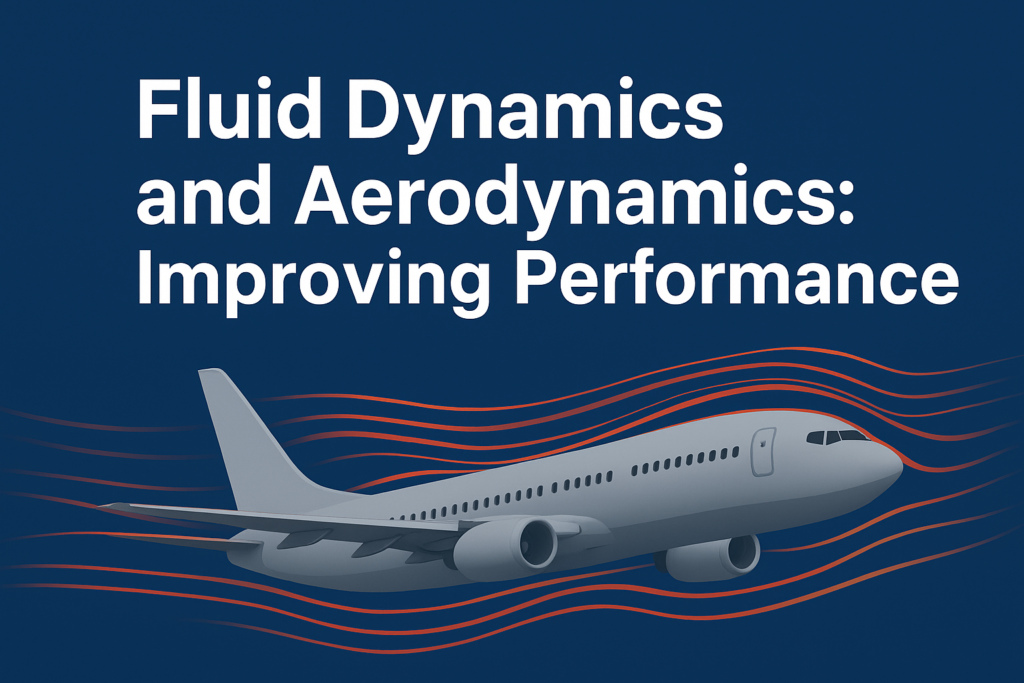
Airflow strongly affects aircraft safety and fuel use. Engineers use aerospace CFD simulation and computational aerodynamics software to study air behavior around wings, fuselage, engines and control surfaces. They test lift, drag, turbulence and flow separation.
Optimizing Designs
ANSYS offers strong solvers for ANSYS CFD solutions for aerospace performance optimization. Engineers test new shapes, wing angles, engine placements and cooling systems. This helps reduce drag and improve fuel use. Better airflow also improves safety by offering stable flight behavior.
Studying Thermal Behavior
Engines, electronics and surfaces generate heat. Engineers run thermal analysis for aircraft to study temperature levels. They test cooling paths and materials. Good thermal design keeps systems safe and extends component life.
Simulation for Safety: Zero Room for Error
Flight Safety Studies
Engineers use flight safety simulation to understand risks. They test emergency conditions, extreme temperatures, storm airflow and system failures. They review how aircraft respond to these events. This helps improve safety margins.
Multiphysics Analysis
Modern aerospace parts handle multiple forces at once. Engineers use multiphysics simulation for aircraft to combine thermal, structural and fluid behavior. This helps test real-world conditions. It improves accuracy and reduces risk.
Studying Fatigue and Long-Term Behavior
Engineers run fatigue and stress analysis aerospace studies to predict long-term part performance. They check cracks, weak spots and repeated load damage. Early insight helps prevent major failures.
Aerodynamic Modeling and System Prediction
Modeling Complex Shapes
Teams use aerodynamic modelling software to test wing shapes, engine inlets and control surfaces. They review pressure and flow behavior. Accurate modeling helps build stable and efficient aircraft.
Predicting Performance
With aircraft performance prediction tools, engineers estimate climb rate, fuel use, stall behavior and control response. These predictions help teams select safer and more efficient designs. They also help refine future models.
Digital Twins and Virtual Prototyping
Digital Twin Technology
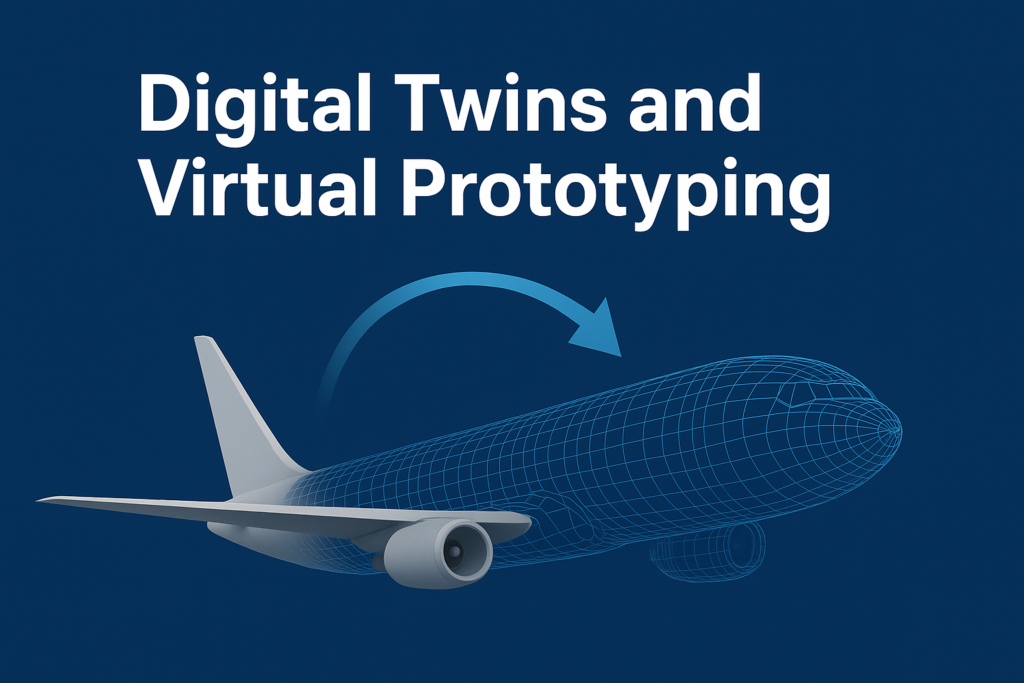
A digital twin is a live virtual model of an aircraft system. Engineers use digital twin for aerospace systems to track part health during real missions. They combine sensor data and simulation to predict failures early. This reduces downtime and increases safety.
Virtual Prototyping
Teams also use virtual prototyping aerospace to test full aircraft behavior without building prototypes. This method supports early testing and reduces cost. Engineers run hundreds of scenarios on the computer. This improves design confidence.
High-Fidelity Simulation
Engineers depend on high-fidelity simulation for aerospace when accuracy is critical. They use detailed models to test vibration, flow and heat. These results guide safe design choices and support certification.
End-to-End Workflow with ANSYS Simulation
A complete design process uses multiple simulation tools. Engineers follow an end-to-end aerospace simulation workflow with ANSYS:
Early concept modeling
Structural, thermal and CFD studies
Detailed subsystem simulation
Load and fatigue checks
Failure prediction
Digital twin setup
Certification support
This process reduces errors and shortens development. It also improves quality.
Engineers rely on simulation tools to solve critical aerospace design problems such as:
Material weakness
Overheating
Excess drag
Structural instability
Control surface inefficiency
Vibration issues
Fatigue cracks
ANSYS allows them to fix these issues before building prototypes.
How Engineers Use ANSYS for Aerospace Design Validation
Design validation is a rule in aerospace. Engineers use ANSYS to confirm strength, performance, thermal stability and vibration behavior. They run detailed tests and compare results with expected performance. This ensures each part follows standards.
With how engineers use ANSYS for aerospace design validation, teams can:
Check materials
Test unsafe load cases
Find weak regions
Improve airflow
Refine cooling paths
Predict long-term damage
Validation builds confidence and supports safer products.
Benefits of Using ANSYS in Aerospace Product Development
Engineers see strong benefits of using ANSYS software in aerospace product development, including:
Earlier problem detection
Lower testing cost
Improved performance
Shorter development cycles
Better safety margins
Reduced prototypes
Improved accuracy
These benefits help companies build strong, efficient and safe aircraft.
The Future of Aerospace Simulation
The future of simulation focuses on faster solvers, machine learning and stronger models. Engineers will use advanced 3D designs, more accurate physics and automated workflows. Digital twins will help monitor in-flight systems. Virtual testing will support certification.
These changes will make simulation even more important. Teams will rely on tools like ANSYS to handle growing design complexity.
Conclusion
Simulation plays a key role in aerospace design and safety. ANSYS provides powerful tools to solve structural, thermal, aerodynamic and performance problems. Engineers rely on these tools to build safer, stronger and more efficient aircraft. This approach supports early testing, reduces risk and improves product performance. Corengg Technologies supports organizations by offering reliable access to ANSYS tools and solutions that help them reach these goals.

What a great article