

Formlabs SLA 3D printer accuracy 3D printing helps engineers, designers, and manufacturers convert ideas into physical parts. Accuracy plays a major role

3D printing helps engineers, designers, and manufacturers convert ideas into physical parts. Accuracy plays a major role in deciding which 3D printing method to use. Two popular methods dominate the market today: SLA and FDM. This blog explains their differences with a clear focus on Formlabs SLA 3D printer accuracy and practical performance.
This article provides an informational comparison of Stereolithography vs Fused Deposition Modeling. It explains how each method works, where each one fits best, and why SLA often delivers better results when accuracy matters.
SLA 3D printing technology uses a controlled light source to harden liquid resin layer by layer. The printer traces each layer using precise light paths. This process supports extremely fine details and smooth surfaces.
SLA belongs to resin-based 3D printing. It relies on accurate photopolymer resin curing to form solid objects. Each layer bonds evenly, which improves dimensional stability and part strength.
FDM 3D printing technology melts plastic filament and deposits it through a nozzle. The printer builds parts by laying down material line by line. Each layer cools before the next layer forms.
This method falls under filament-based 3D printing. It suits simple prototypes, quick models, and low-cost production. However, the process limits detail and surface smoothness.
Accuracy in 3D printing includes dimensional precision, surface quality, and repeatability. A proper 3D printer accuracy comparison evaluates how closely a printed part matches its original design.
Factors that influence accuracy include: – Layer thickness – Material control – Motion stability – Software calibration
Among these factors, layer resolution in 3D printing plays a key role. Thinner layers usually result in higher detail and better accuracy.
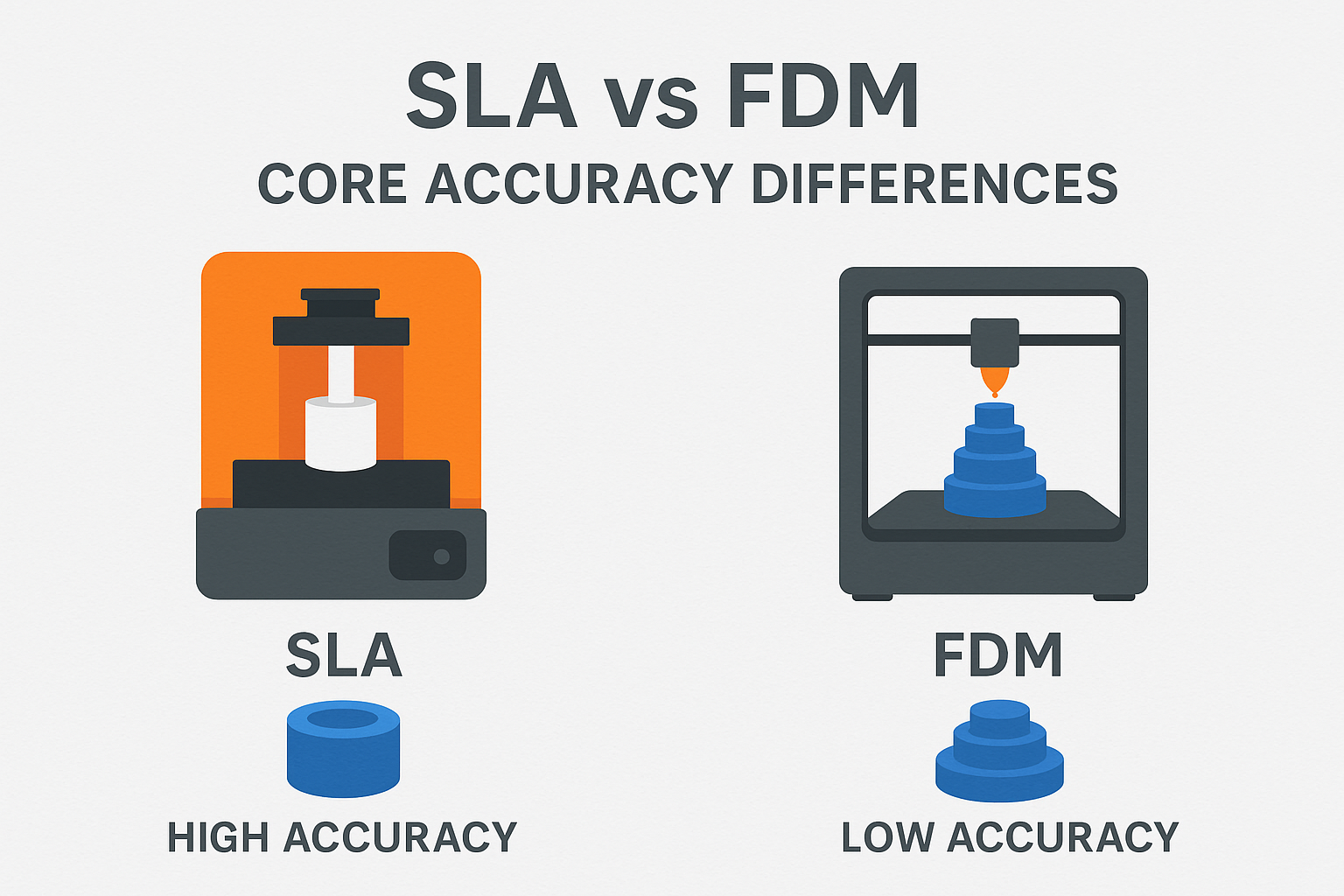
SLA supports thinner layers than FDM. This allows SLA printers to capture fine edges, text, and curves. FDM printers use thicker layers, which can soften details.
Because of this, SLA excels in high-precision 3D printing. Engineers often prefer it for functional and visual prototypes.
SLA resin cures uniformly. FDM filament expands and cools unevenly. These behaviors explain many FDM 3D printing limitations related to warping and tolerance issues.
A common question in engineering teams is why SLA is more accurate than FDM. The answer lies in controlled curing and stable layer bonding.
SLA printers use light to define part geometry. The process avoids nozzle vibration and material flow issues. FDM printers depend on mechanical extrusion, which introduces small variations.
These differences make SLA more suitable for precise applications.
The topic of SLA vs FDM surface finish highlights another major difference. SLA parts come out smooth with minimal post-processing. FDM parts show visible layer lines.
Smooth surfaces improve part fit and appearance. They also reduce finishing time in production workflows.
Teams often compare SLA vs FDM for prototyping accuracy when choosing a system.
SLA works best for: – Design validation – Functional testing – Detailed assemblies
FDM works best for: – Early concept models – Large, non-critical parts – Cost-sensitive testing
When accuracy drives decisions, SLA becomes the preferred option.
Formlabs SLA printers combine reliable hardware, smart software, and validated materials. This integration supports consistent results across prints.
These systems support professional SLA 3D printers used in engineering, healthcare, and manufacturing environments.
Formlabs resin 3D printing offers a wide range of materials. Each resin targets a specific use, such as strength, flexibility, or heat resistance.
Controlled resin chemistry improves repeatability and accuracy. It also supports long-term dimensional stability.
Many companies depend on SLA systems for tooling and end-use parts. These applications demand high reliability and repeatability.
SLA systems support industrial 3D printing accuracy by delivering predictable results across multiple builds. This consistency reduces waste and rework.
When users search for the best 3D printer for high accuracy, they often compare SLA and FDM systems.
SLA offers: – Better dimensional control – Higher surface quality – Improved fine detail
FDM offers: – Lower initial cost – Simple operation
For precision-focused work, SLA remains the stronger choice.
Understanding Formlabs SLA printer benefits helps buyers evaluate long-term value. These benefits include: – Consistent print quality – Reliable material performance – Reduced post-processing
These advantages support faster product development cycles.
Many professionals ask which 3D printing technology is more accurate. In most cases, SLA provides better results for tight tolerances and detailed parts.
FDM still serves important roles, but accuracy-focused tasks favor SLA.
SLA strengths: – High detail – Smooth surface finish – Stable dimensions
FDM strengths: – Cost efficiency – Faster rough prototypes – Larger build volumes
Understanding these strengths helps teams choose the right method.
SLA and FDM address different needs. SLA focuses on accuracy, detail, and surface quality. FDM focuses on affordability and basic modeling. For applications that demand precision, SLA stands out as the reliable solution.
Organizations seeking expert guidance and dependable solutions can work with Corengg Technologies to implement advanced SLA printing systems tailored to their needs.
3D Printer Price in India: Complete Buying Guide (2026) |
Tool Manufacturing Software The tool and die industry demands extreme
Medical 3D printing solutions The pharmaceutical industry is moving toward
Formlabs Printer Reseller India Introduction Modern factories face tight deadlines,
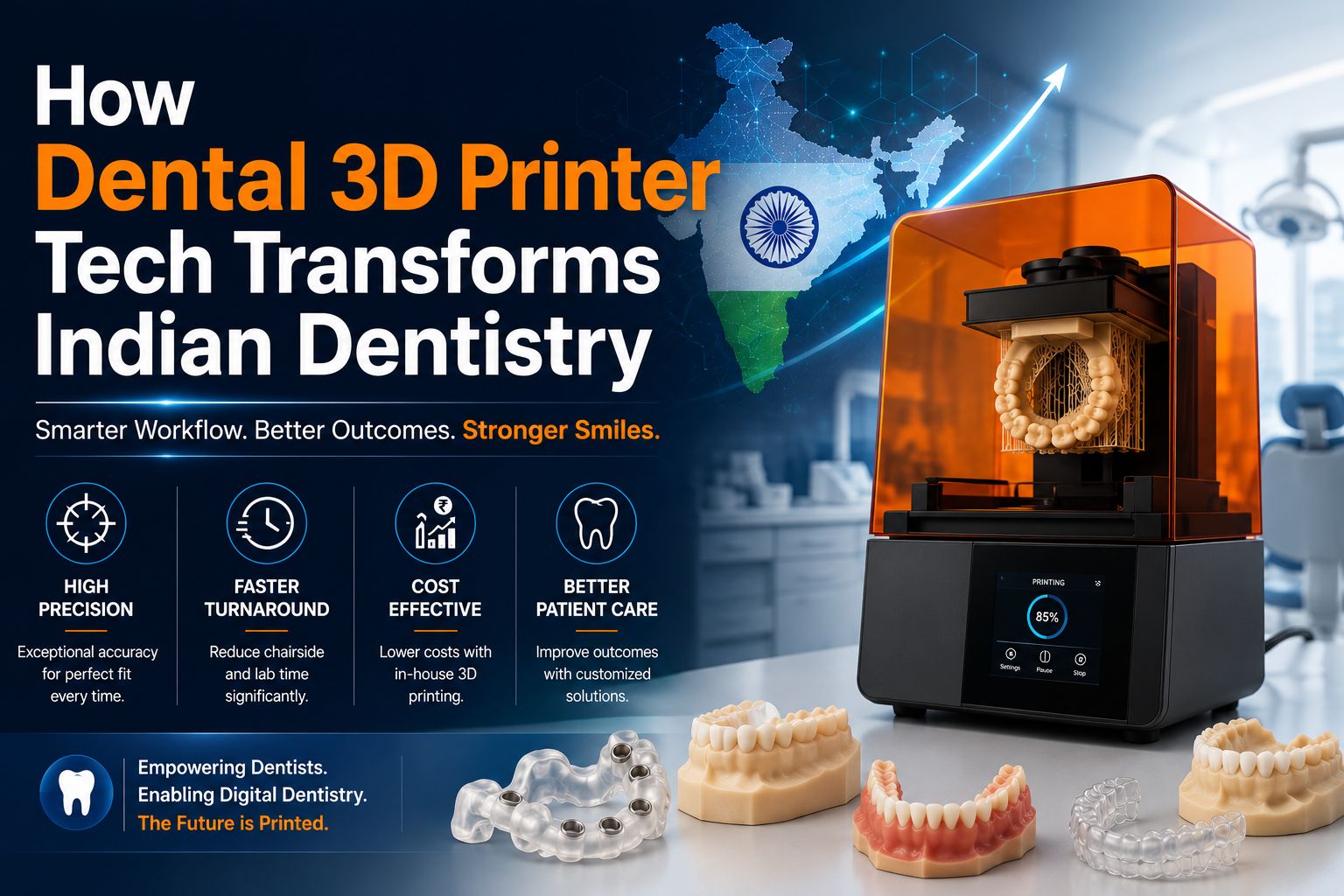
Authorized Formlabs Dental Reseller · India How Dental 3D Printer
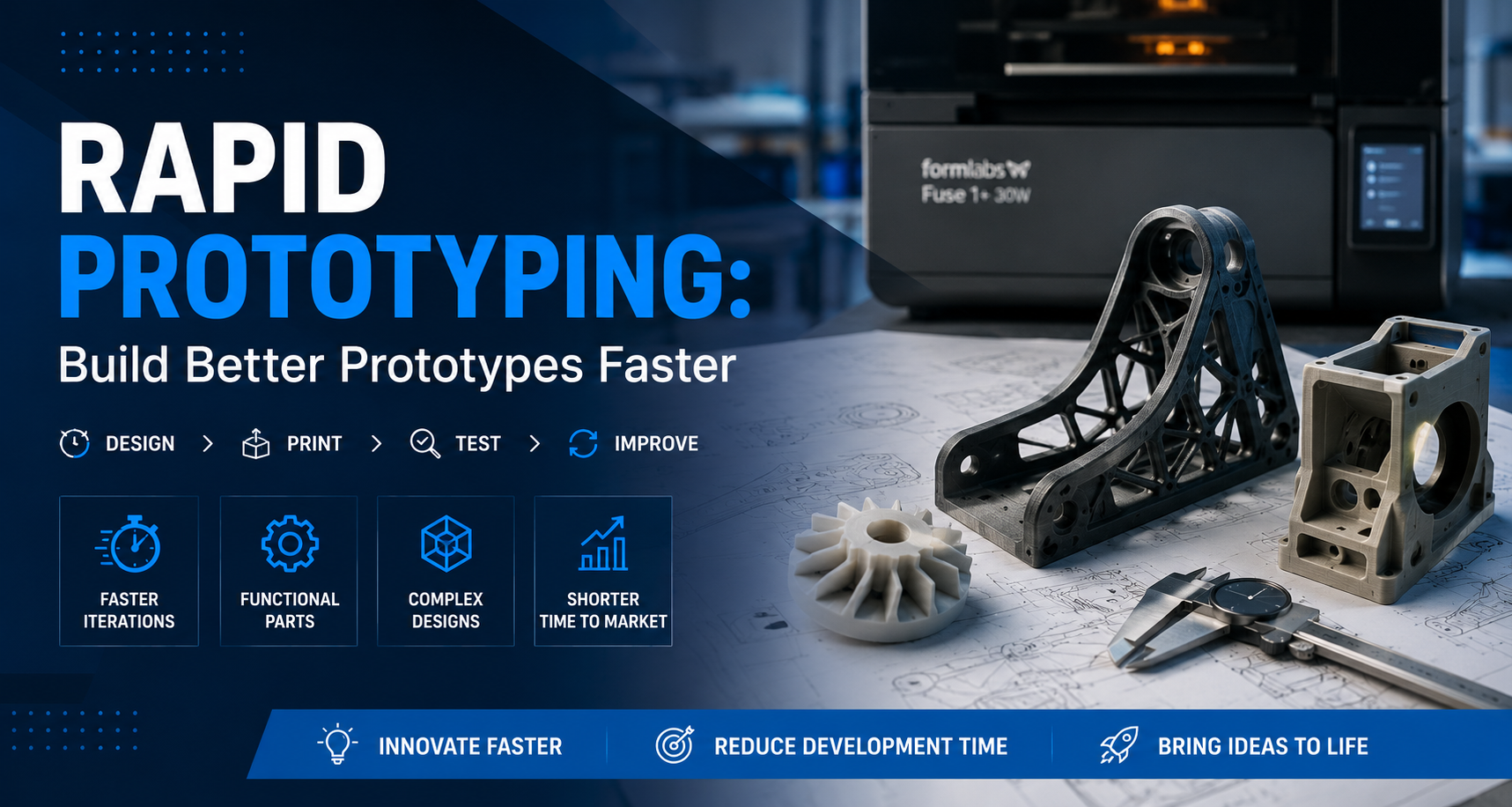
3D Printing / Rapid Prototyping Rapid Prototyping: Build Better Prototypes
