

EV Battery thermal simulation software. Electric vehicles (EVs) are the future of transport. They help reduce pollution and save energy. However, these

Electric vehicles (EVs) are the future of transport. They help reduce pollution and save energy. However, these vehicles rely on powerful batteries that can get very hot. If a battery gets too hot, it can cause a serious problem called thermal runaway. This is a chain reaction where heat builds up quickly and causes a fire. To stop this, engineers use EV battery thermal simulation software. This special software helps them design safer cars without building thousands of expensive prototypes.
Thermal runaway is a dangerous event for any battery. It usually starts with battery thermal runaway causes like a short circuit, overcharging, or physical damage from a crash. When one cell fails, it releases a lot of heat. This heat then moves to the cells next to it. This process is called thermal propagation in battery packs.
If the heat spreads too fast, the entire battery pack can catch fire. This creates EV battery overheating risks that car makers must avoid. Understanding lithium-ion battery safety is the first step in making electric cars better. Engineers need to know how heat moves and how to stop it before it becomes a disaster.
ANSYS is a leader in engineering simulation. They provide tools like ANSYS Fluent battery simulation to study heat. Using ANSYS simulation for electric vehicle batteries, engineers can see inside the battery while it is working. They can find “hot spots” where the temperature is too high.
A battery thermal management system (BTMS) acts like the cooling system in your house. It keeps the battery at the right temperature. The ANSYS battery thermal management system (BTMS) helps engineers test different ways to cool the battery. They can test air cooling, liquid cooling, or even new materials that soak up heat.
Batteries are complex. They involve chemistry, electricity, and heat all at once. ANSYS multiphysics battery modeling allows engineers to simulate all these things together. It shows how electricity flowing through the battery creates heat and how that heat affects the battery’s structure. This is vital for EV battery safety simulation.
Many people wonder how to prevent battery thermal runaway in EVs. The answer lies in early testing. By using EV battery thermal simulation software, designers can find flaws early.
During lithium-ion battery thermal runaway analysis, engineers simulate a cell failure on purpose in a virtual world. They watch how the heat moves to other cells. They use this data to design better thermal barriers. These barriers act like firewalls to stop the heat from spreading.
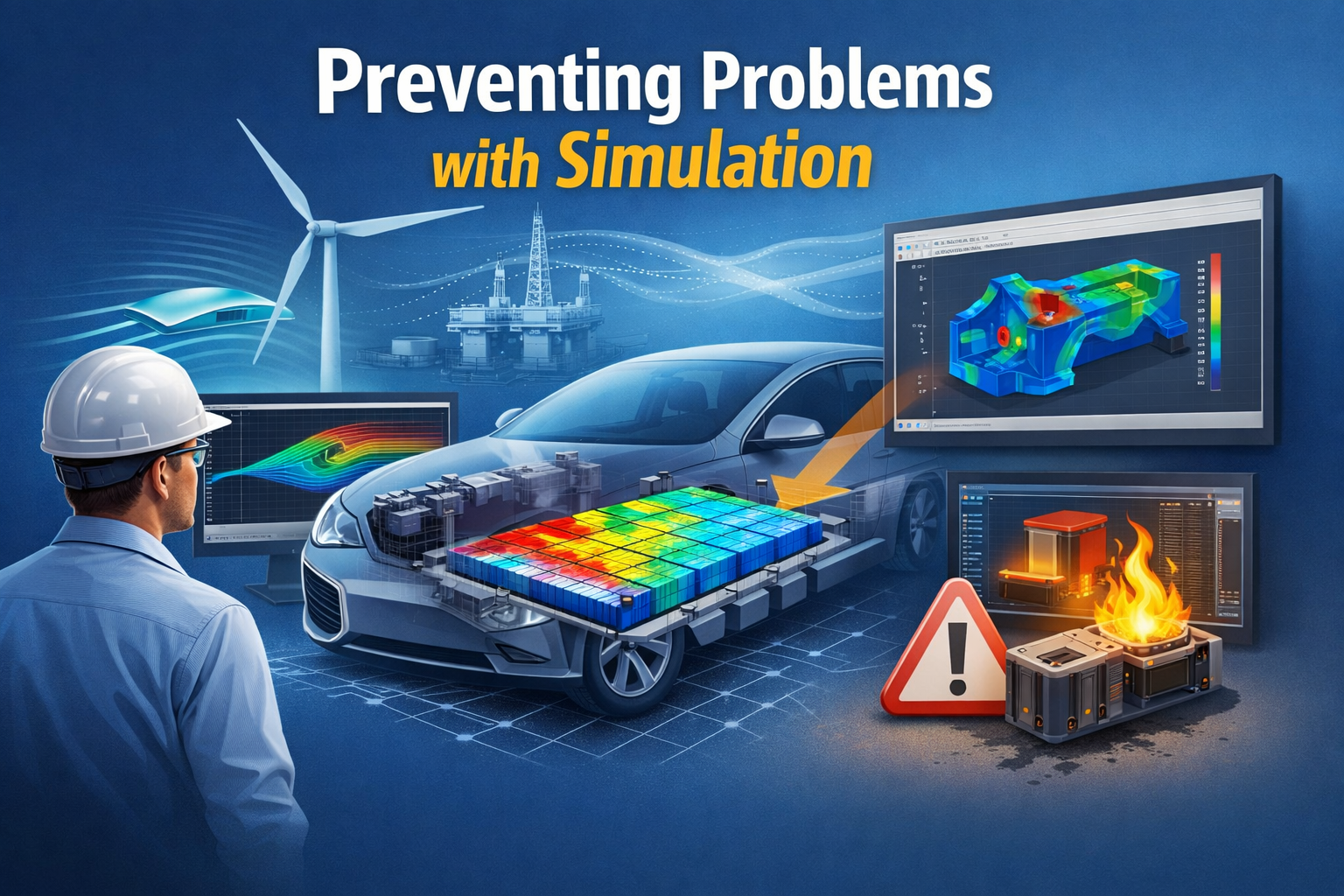
Cooling is the best way to keep batteries safe. EV battery cooling simulation helps engineers decide where to put cooling pipes or fans. They look at battery cell temperature distribution to make sure every part of the battery stays cool. If one side is hotter than the other, the battery will wear out faster or even fail.
CFD stands for Computational Fluid Dynamics. It is a fancy way of saying “modeling how liquids and gases move.” A battery thermal runaway CFD simulation shows how hot gases move inside a battery pack when a cell fails.
These gases are very hot and can be explosive. Using ANSYS battery pack thermal analysis, engineers can design vents. These vents let the hot gases escape safely away from the passengers. This is a key part of electric vehicle fire prevention.
When looking for the best simulation software for EV battery safety, many companies choose ANSYS. It is accurate and can handle large battery packs with thousands of cells. ANSYS battery pack thermal analysis provides the detail needed to meet international safety standards.
An EV battery overheating solution using ANSYS often involves changing the cooling strategy. Engineers might switch from air cooling to liquid cooling if the simulation shows the battery gets too hot during fast charging.
Battery pack heat dissipation is how the battery gets rid of extra heat. If the heat stays inside, the battery gets damaged. Engineers use battery pack thermal analysis ANSYS to test different materials for the battery case. Some materials conduct heat better, which helps the battery stay cool.
Before a car goes on the road, it must pass many tests. Battery safety validation through simulation saves time. Instead of crashing real cars and burning real batteries, engineers do it on a computer first. This makes the final physical test much more likely to pass.
Sometimes batteries fail because of how they are made. Battery failure analysis helps engineers understand why. If a cell has a tiny defect, it might create a “hot spot.” ANSYS software can simulate these tiny defects to see if they will cause a fire later.
By looking at thermal runaway prevention in EV batteries, we can see that technology is making cars safer every day. We can predict how a battery will behave over many years of use. This helps in making batteries that last longer and never get too hot.

Building a physical battery pack for an EV costs a lot of money. If the design is wrong, the company loses time and money. EV battery thermal simulation software allows for “virtual prototyping.” This means engineers can try out 100 different designs in a week. They only build the best and safest one.
Speed: Find safety issues in hours, not months.
Detail: See exactly where the heat goes inside a cell.
Cost: Save millions by reducing physical crash and fire tests.
Reliability: Ensure the battery works in both hot deserts and cold winters.
Electric vehicle safety is a top priority for everyone. As we move away from gasoline, we must make sure our new energy sources are safe. ANSYS provides the tools to make this happen. By using EV battery thermal simulation software, engineers can stop thermal runaway before it starts. They can design better cooling systems and stronger battery packs.
Simulation is the “secret ingredient” that makes modern EVs reliable. It helps prevent fires, extends battery life, and gives drivers peace of mind. Protecting passengers starts with a good computer model. Through advanced analysis, we can enjoy the benefits of electric cars without the risks of overheating.
For more information on how to implement these simulation solutions in your engineering projects, contact Corengg Technologies.

Aerospace engineering simulation software The aerospace industry builds machines that

simulation software services The demand for clean and renewable energy
How CFD Simulation Software Cuts Pressure Drop in Pipes |

Corengg Technologies is proud to announce its official partnership with
Ansys CFD Convergence is a common issue in Computational Fluid

Choosing the right ANSYS Partner in India is important for

1 Comment
Insightful explanation of EV battery thermal simulation software. The technical concepts are presented in a clear and reader friendly way.