Most Form 4 print failures trace back to a handful of avoidable design decisions — a wall too thin, an overhang left unsupported, a hole drawn too small. This rulebook covers the 11 dimensional limits that decide whether your part prints clean the first time.
A print failure is usually a design decision, not a printer fault
Before blaming the printer or the resin, most failed prints trace back to a feature drawn outside the machine’s proven limits. These three failure patterns account for the majority of support tickets we see.
Warped / Detached Walls
Walls thinner than 0.2 mm can't withstand the peel forces during printing and either warp or separate from the model entirely.
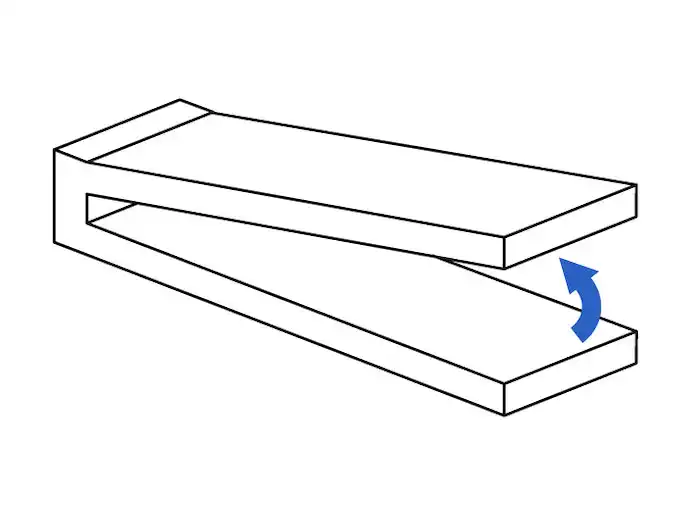
Failed Overhangs & Bridges
Unsupported horizontal features beyond their span limit sag or deform before the layer fully cures.
Closed Holes & Fused Details
Holes, clearances, and engraved details drawn below the minimum size can partially or fully close during printing.
The Rulebook
11 dimensional limits for a clean first print
Tested on Form 4 in Grey Resin at 50 micron layer height. Other resins and layer heights may shift these values slightly — ask us if you’re unsure about a specific material.
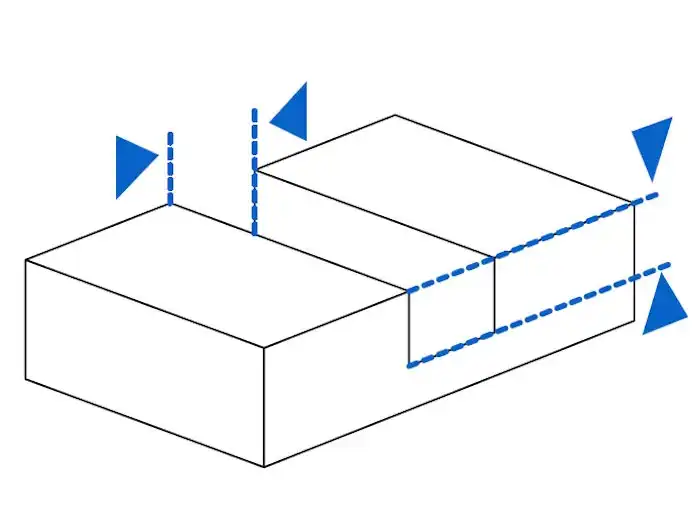
Rule 01
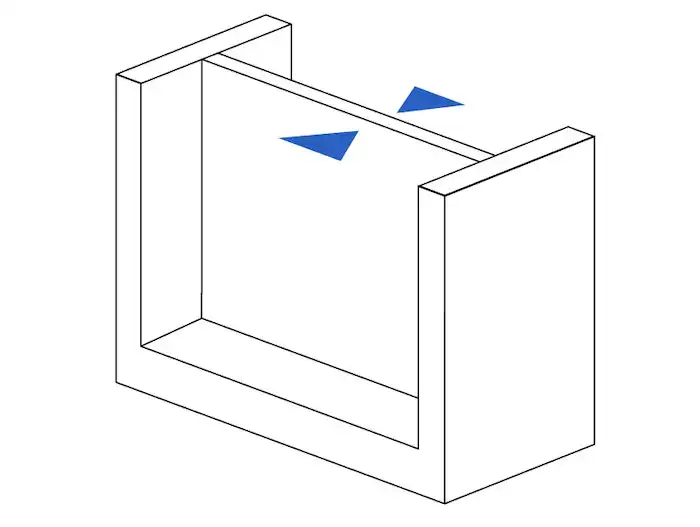
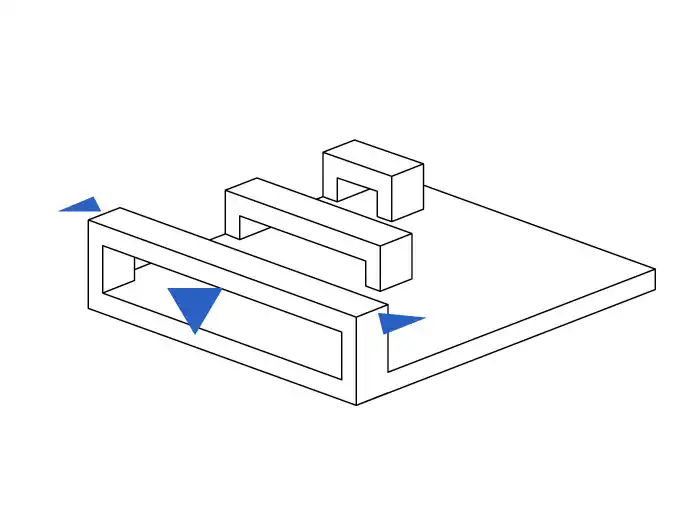
Minimum Supported Wall Thickness
0.2 mm
A wall connected to others on two or more sides. Thinner walls risk warping under peel forces.
Rule 02
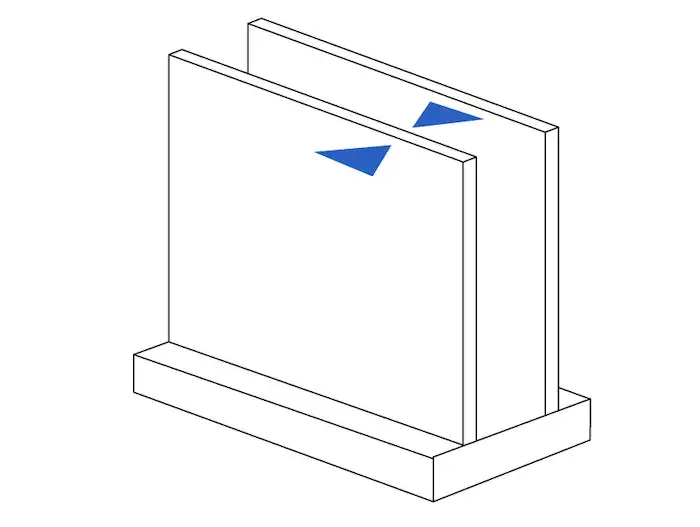
Minimum Unsupported Wall Thickness
0.2 mm
A wall connected on fewer than two sides. Below this, expect warping or full detachment.
Rule 03
Max Unsupported Overhang
5.0 mm
Beyond this length, a horizontal feature won't fully form without added support structures.
Rule 04
Min Unsupported Overhang Angle
10° from level
Shallower angles risk breaking off during the peel step of printing.
Rule 05
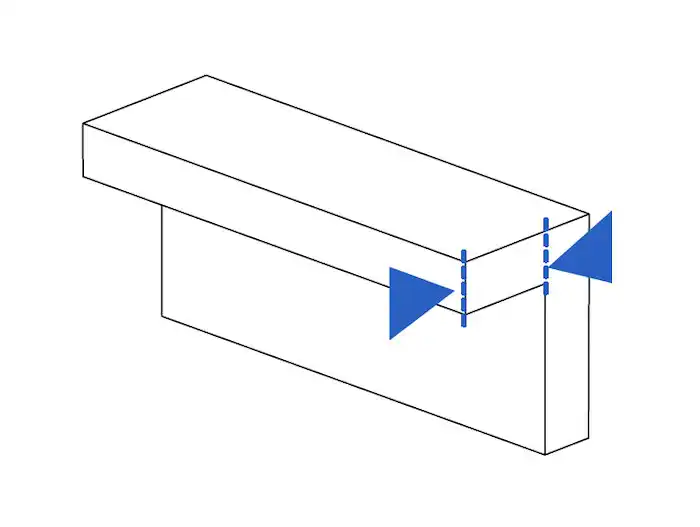
Max Horizontal Span/Bridge
29 mm
The maximum distance between two supports for a 5×3 mm beam before failure becomes likely.
Rule 06
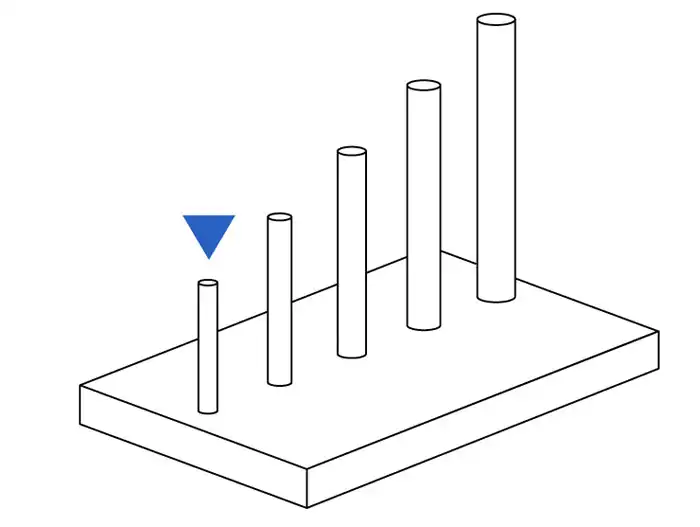
Min Vertical-Wire Diameter
0.3–0.6 mm
0.3 mm supports up to 7 mm of height; 0.6 mm supports up to 30 mm before deforming.
Rule 07
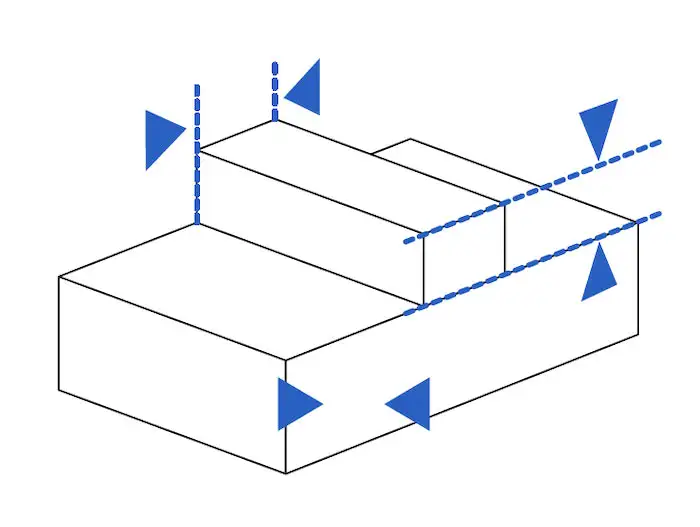
Minimum Embossed Detail
0.1 mm
Raised surface details like text or logos smaller than this may not be visible on the finished part.
Rule 08
Minimum Engraved Detail
0.15 mm
Recessed details narrower or shallower than this may fuse with the surrounding surface.
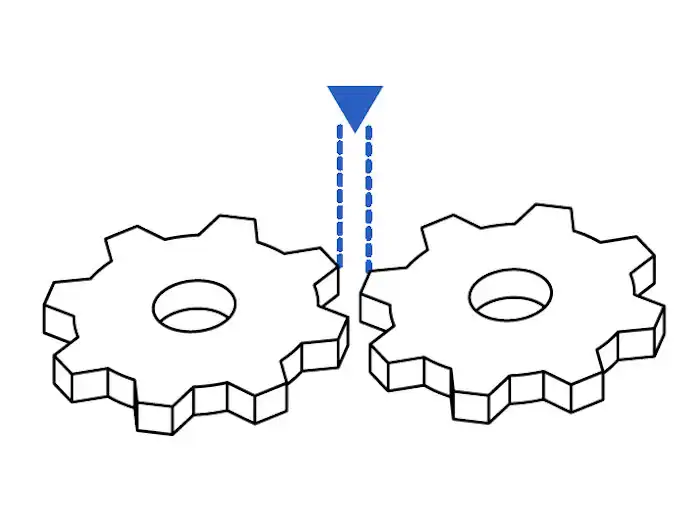
Rule 09
Minimum Clearance
0.4 mm
The gap needed between two moving or mating parts (like gear teeth) to avoid fusing together.
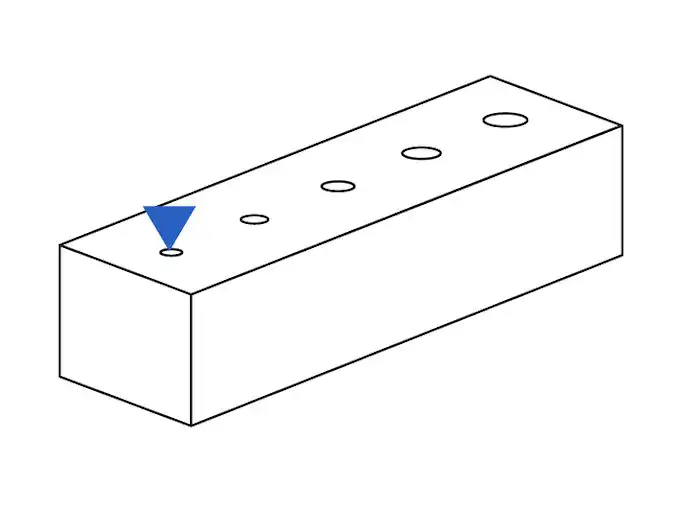
Rule 10
Minimum Hole Diameter
0.5 mm
Holes smaller than this in any axis risk closing over during printing.
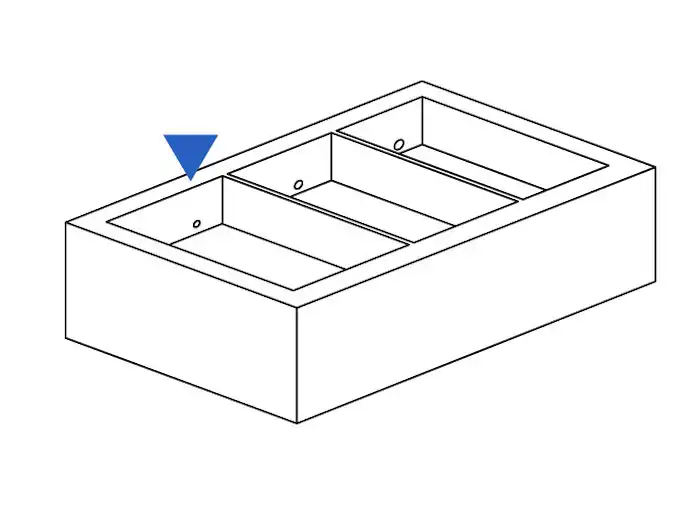
Rule 11
Minimum Drain Hole Diameter
0.75 mm
Required on fully enclosed cavities so trapped resin can escape and avoid a cupping blowout.
Beyond Individual Features
What accuracy to expect across your whole part
Dimensional tolerance scales with feature size. These figures come from Formlabs test data on Grey Resin at 100 micron layer height.
Feature Size
Tolerance
Lower Limit
1–30 mm
±0.15%
±0.02 mm
31–80 mm
±0.2%
±0.06 mm
81–150 mm
±0.3%
±0.15 mm
Generation Over Generation
How much more accurate is Form 4 than Form 3?
The recommended design values didn’t change between generations — but Form 4 hits those intended dimensions more precisely across almost every feature type.
Feature
Intended Size
Form 4 Actual
Form 3 Actual
Min. supported wall
0.2 mm
0.17 mm
0.25 mm
Min. unsupported wall
0.2 mm
0.18 mm
0.26 mm
Max. unsupported overhang
5.0 mm
5.00 mm
5.03 mm
Min. vertical wire (7mm)
0.3 mm
0.20 mm
0.35 mm
Min. embossed detail
0.1 mm
0.13 mm
0.24 mm
Min. hole diameter
0.5 mm
0.42 mm
0.26 mm
Min. drain hole
0.75 mm
0.91 mm
0.90 mm
Source: Formlabs internal test data, Grey Resin V5 at 50 microns. Values closer to the intended size indicate a more precise printer.
DOWNLOAD
Get the full Form 4 Design Rulebook
Includes all 11 rules with diagrams, the full tolerance chart, and a printable design checklist your team can pin next to the workstation.
Download the PDF
We’ll also flag anything in your current design that might cause a print failure.
By submitting, you agree to be contacted by Corengg Technologies regarding Formlabs products.
Schedule Your Free Consultation with Corengg Technologies Today!